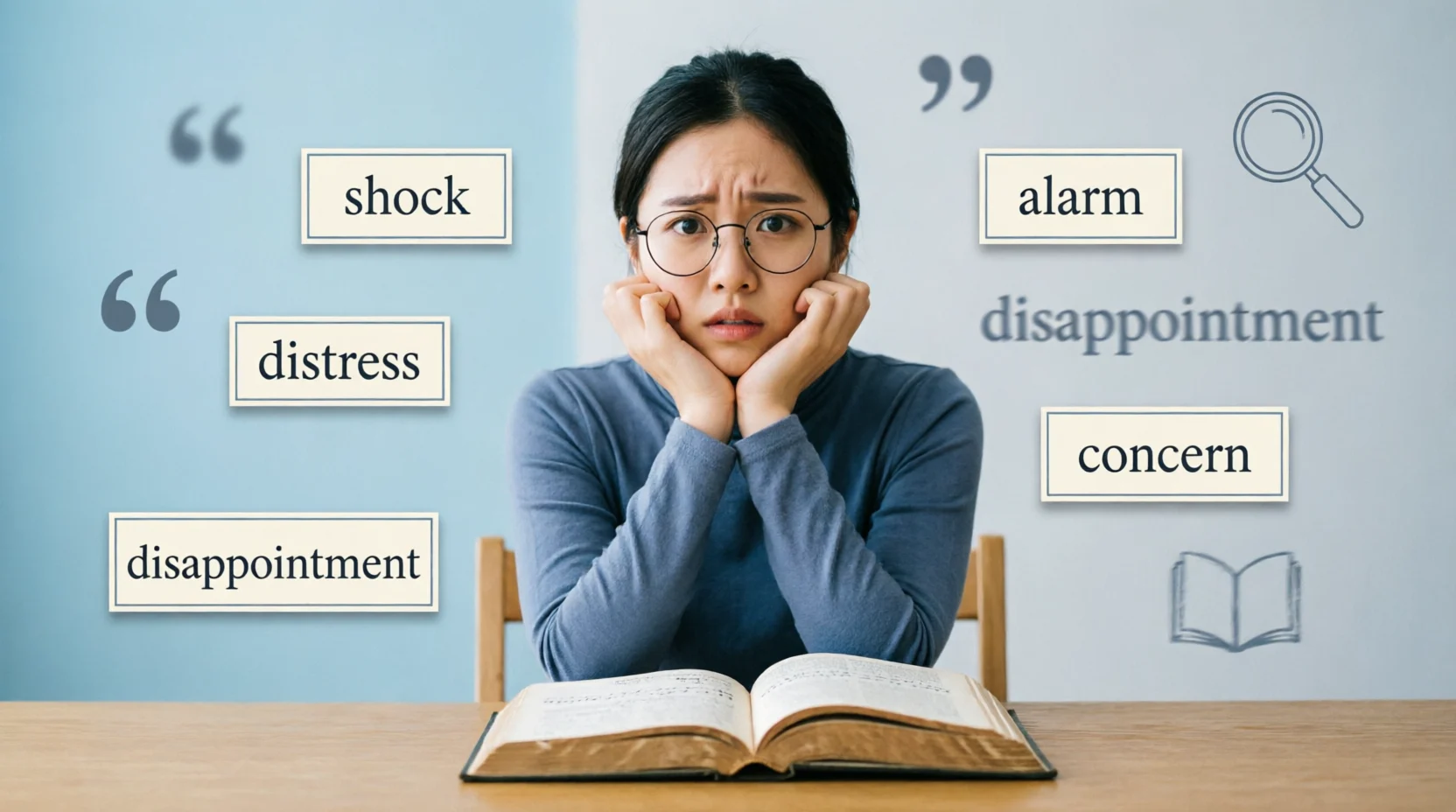
Finding the right dismay synonym depends on the exact emotion you want to express. Words such as distress, alarm, disappointment, consternation, shock, concern, and disheartenment can replace “dismay,” but each has a slightly different meaning and tone. Choosing the best alternative helps your writing sound more precise and natural.
Quick Answer
The best synonyms for dismay include distress, alarm, concern, disappointment, shock, worry, despair, discouragement, consternation, unease, and disheartenment.
Dismay usually describes a strong feeling of worry, shock, fear, or disappointment caused by something unexpected or unpleasant.
Example:
She looked at the damaged painting in dismay.
Depending on the context, you might say:
- Alarm when something causes sudden fear or worry
- Disappointment when something fails to meet expectations
- Distress when someone experiences serious emotional upset
- Consternation when something causes confusion and anxiety
- Disheartenment when someone loses confidence or hope
What Does “Dismay” Mean?
Dismay is a feeling of sudden worry, fear, sadness, or disappointment caused by something unpleasant or unexpected.
It can be used as both a noun and a verb.
Dismay as a Noun
As a noun, dismay describes an emotional reaction.
Example:
To her dismay, the meeting was canceled.
Here, the person feels disappointed or upset because something happened that she did not want.
Dismay as a Verb
As a verb, dismay means to make someone feel worried, shocked, upset, or discouraged.
Example:
The unexpected news dismayed the entire team.
Simple Meaning
In simple English, dismay means a strong feeling of worry, shock, or disappointment when something bad or unexpected happens.
30 Best Dismay Synonyms
Not every synonym has exactly the same meaning as dismay. The following words are useful alternatives, but their appropriate use depends on the situation.
1. Distress
Simple meaning: Severe worry, sadness, or emotional pain.
Example:
The news caused considerable distress among the workers.
Best usage/context: Use distress when the emotional suffering is serious or noticeable.
2. Alarm
Simple meaning: Sudden fear or worry about danger or a problem.
Example:
The strange noise caused alarm among the residents.
Best usage/context: Best when something creates immediate concern or fear.
3. Concern
Simple meaning: Worry about someone or something.
Example:
The sudden drop in sales caused concern among investors.
Best usage/context: Use concern for moderate worry, especially in formal or everyday situations.
4. Disappointment
Simple meaning: Sadness because something did not happen as expected.
Example:
There was obvious disappointment when the event was canceled.
Best usage/context: Best when unmet expectations are the main emotion.
5. Shock
Simple meaning: A strong feeling caused by something unexpected.
Example:
The announcement came as a shock to everyone.
Best usage/context: Use shock when an event is surprising or difficult to believe.
6. Worry
Simple meaning: An uneasy feeling about a possible problem.
Example:
The delay caused worry among the passengers.
Best usage/context: Appropriate for ordinary or continuing anxiety.
7. Consternation
Simple meaning: Great worry, confusion, or surprise.
Example:
The sudden change in policy caused consternation among employees.
Best usage/context: A strong, formal alternative to dismay.
8. Disheartenment
Simple meaning: A loss of confidence, hope, or enthusiasm.
Example:
Repeated failures led to considerable disheartenment.
Best usage/context: Useful when disappointment causes someone to lose motivation.
9. Discouragement
Simple meaning: A feeling of reduced confidence or hope.
Example:
The poor results brought discouragement to the team.
Best usage/context: Use when an unpleasant result makes someone less willing to continue.
10. Unease
Simple meaning: A feeling that something is wrong or uncertain.
Example:
The silence created a sense of unease.
Best usage/context: Best for mild anxiety or discomfort.
11. Apprehension
Simple meaning: Anxiety about something that may happen.
Example:
She entered the interview room with some apprehension.
Best usage/context: Use when someone fears a possible future outcome.
12. Anxiety
Simple meaning: Strong or persistent worry.
Example:
The uncertain future caused considerable anxiety.
Best usage/context: Appropriate when worry is ongoing or intense.
13. Despair
Simple meaning: A complete loss of hope.
Example:
The failure left him in despair.
Best usage/context: Stronger than dismay and suitable when hope has almost disappeared.
14. Sorrow
Simple meaning: Deep sadness.
Example:
She expressed sorrow over the unexpected loss.
Best usage/context: Use when sadness is more important than surprise or worry.
15. Agitation
Simple meaning: A state of nervousness, worry, or emotional disturbance.
Example:
The unexpected decision caused agitation among the staff.
Best usage/context: Useful when someone becomes visibly restless or upset.
16. Frustration
Simple meaning: Annoyance caused by being unable to achieve something.
Example:
The repeated delays caused widespread frustration.
Best usage/context: Best when obstacles prevent progress.
17. Disturbance
Simple meaning: Something that interrupts peace or emotional stability.
Example:
The announcement created a disturbance in the community.
Best usage/context: More commonly describes disruption than a personal emotion.
18. Disquiet
Simple meaning: A feeling of worry or lack of peace.
Example:
The rumors caused growing disquiet among residents.
Best usage/context: A formal alternative for unease or concern.
19. Perturbation
Simple meaning: A state of worry, confusion, or emotional disturbance.
Example:
The sudden change caused considerable perturbation.
Best usage/context: Formal writing, especially when describing emotional or mental disturbance.
20. Horror
Simple meaning: An intense feeling of fear, shock, or disgust.
Example:
She watched in horror as the accident unfolded.
Best usage/context: Use when the event is extremely frightening or disturbing.
21. Fear
Simple meaning: An unpleasant emotion caused by danger or the expectation of harm.
Example:
Fear spread through the crowd.
Best usage/context: Best when actual or perceived danger is central.
22. Fright
Simple meaning: A sudden feeling of fear.
Example:
The loud explosion gave everyone a fright.
Best usage/context: More informal and immediate than dismay.
23. Trepidation
Simple meaning: Nervous fear about something that may happen.
Example:
He approached the difficult conversation with trepidation.
Best usage/context: Useful for nervous anticipation.
24. Bewilderment
Simple meaning: Confusion caused by something difficult to understand.
Example:
The unexpected instructions left the students in bewilderment.
Best usage/context: Choose this when confusion is stronger than fear or disappointment.
25. Discomfort
Simple meaning: A feeling of uneasiness or embarrassment.
Example:
The awkward question caused visible discomfort.
Best usage/context: Best for mild emotional or physical uneasiness.
26. Dread
Simple meaning: Strong fear about something unpleasant that may happen.
Example:
She felt dread as the deadline approached.
Best usage/context: Use when someone strongly expects something bad.
27. Sadness
Simple meaning: The feeling of being unhappy.
Example:
The news brought sadness to the entire family.
Best usage/context: Appropriate when the emotional response is primarily sorrow.
28. Regret
Simple meaning: Sadness or disappointment about something that happened or was done.
Example:
He expressed regret over his decision.
Best usage/context: Use when someone wishes something had been different.
29. Disillusionment
Simple meaning: Disappointment after discovering that something is not as good as expected.
Example:
The experience led to disillusionment with the organization.
Best usage/context: Best for lost expectations, ideals, or beliefs.
30. Bewilderment and Concern
Simple meaning: A mixture of confusion and worry.
Example:
The unexpected announcement was met with bewilderment and concern.
Best usage/context: Useful when a situation creates both uncertainty and anxiety.
Note: “Bewilderment and concern” is a phrase rather than a single-word synonym. If you need a strict one-word replacement, consternation is a stronger choice.
Dismay Synonyms Comparison Table
| Synonym | Main Emotion | Intensity | Best Context |
| Dismay | Shock, worry, disappointment | High | Unexpected bad news |
| Distress | Emotional suffering | High | Serious emotional upset |
| Alarm | Fear and concern | High | Possible danger |
| Concern | Worry | Moderate | Problems or uncertainty |
| Disappointment | Unmet expectations | Moderate | Failed hopes |
| Shock | Surprise | High | Unexpected events |
| Consternation | Worry and confusion | High | Formal situations |
| Unease | Mild anxiety | Low–Moderate | Uncertainty |
| Apprehension | Future worry | Moderate | Anticipating problems |
| Anxiety | Persistent worry | Moderate–High | Ongoing uncertainty |
| Despair | Loss of hope | Very High | Severe disappointment |
| Discouragement | Loss of confidence | Moderate | Failure or setbacks |
| Disheartenment | Loss of enthusiasm | Moderate | Repeated setbacks |
| Dread | Fear of what is coming | High | Anticipated problems |
| Disillusionment | Lost expectations | Moderate–High | Broken ideals |
Dismay vs. Similar Words
Understanding the differences between related words can help you choose the most accurate expression.
Dismay vs. Distress
Dismay often includes surprise, disappointment, or shock.
Distress focuses more strongly on emotional suffering.
- She reacted with dismay to the unexpected decision.
- The accident caused considerable distress.
Dismay vs. Alarm
Alarm usually suggests fear or concern about danger.
Dismay can involve fear, but it may also involve disappointment or discouragement.
- The smoke caused alarm.
- The poor results caused dismay.
Dismay vs. Disappointment
Disappointment specifically relates to expectations that were not fulfilled.
Dismay is broader and can include shock, worry, and discouragement.
- He felt disappointment after losing the competition.
- She looked at the damage in dismay.
Dismay vs. Shock
Shock emphasizes surprise.
Dismay emphasizes the negative emotional response to an unpleasant situation.
- The sudden announcement shocked everyone.
- The workers reacted with dismay.
Dismay vs. Concern
Concern is usually milder.
Dismay suggests a stronger emotional reaction.
- There is concern about rising costs.
- The unexpected closure caused widespread dismay.
How to Choose the Right Dismay Synonym
The best alternative depends on tone, meaning, and intent.
For Mild Worry
Choose:
- Concern
- Unease
- Discomfort
- Worry
Example:
There was growing concern about the delay.
These words work well in everyday conversations and professional writing.
For Strong Fear
Choose:
- Alarm
- Fear
- Dread
- Horror
- Fright
Use these when danger, threat, or intense fear is central to the situation.
Example:
The warning caused alarm throughout the neighborhood.
For Disappointment
Choose:
- Disappointment
- Regret
- Discouragement
- Disheartenment
- Disillusionment
These are better when expectations have been damaged or hopes have failed.
Example:
The cancellation caused considerable disappointment.
For Formal Writing
Choose:
- Consternation
- Disquiet
- Perturbation
- Apprehension
- Distress
These words can make formal or academic writing more precise, although they should not be used simply to sound complicated.
For Loss of Hope
Choose:
- Despair
- Discouragement
- Disheartenment
Use these when a person feels that a situation has seriously damaged their confidence or hope.
Example:
Repeated rejection eventually led to discouragement.
For Confusion and Worry Together
Choose:
- Consternation
- Bewilderment
- Disquiet
Consternation is particularly useful when people are both surprised and worried by an unexpected development.
Common Usage Mistakes
1. Treating Every Synonym as Exactly Equal
Words that are similar do not always have identical meanings.
For example, fear focuses on danger, while disappointment focuses on unmet expectations.
Choose the word that describes the main emotion.
2. Using “Dismay” When You Mean Simple Sadness
Dismay often involves more than sadness. It can include surprise, worry, shock, or disappointment.
Instead of:
She felt dismay because her friend moved away.
You might use:
She felt sadness because her friend moved away.
If the departure was unexpected and upsetting, however, dismay may be appropriate.
3. Confusing Dismay With Dread
Dread usually involves fear about something expected to happen.
Dismay is often a reaction to something that has already happened or has just been discovered.
4. Using Strong Words for Mild Situations
Words such as despair and horror are much stronger than concern or unease.
Match the strength of the word to the emotional situation.
5. Using Formal Words in Casual Conversations
Words such as perturbation and consternation can sound formal.
In everyday speech, simpler choices such as worry, concern, shock, or disappointment are usually more natural.
FAQs:
What is the best synonym for dismay?
There is no single best synonym for every situation. Distress, alarm, concern, disappointment, shock, and consternation are among the closest alternatives, depending on the intended meaning.
What is a simple synonym for dismay?
Worry, shock, disappointment, or concern can be simple alternatives to dismay. The right choice depends on the context.
Is “distress” a synonym for “dismay”?
Yes, distress can be a synonym for dismay when the situation causes significant emotional upset. However, distress generally emphasizes suffering more strongly.
Is “disappointment” the same as “dismay”?
Not exactly. Disappointment focuses on unmet expectations, while dismay can combine disappointment with shock, worry, or discouragement.
What is a strong synonym for dismay?
Consternation, distress, alarm, and despair can be strong alternatives, but they express different emotional shades. Despair is much stronger because it suggests a loss of hope.
What is the opposite of dismay?
Depending on the context, possible opposites include delight, satisfaction, confidence, reassurance, relief, and hope.
For example:
- The news caused dismay.
- The good news brought relief.
Can “dismay” be used as a verb?
Yes. As a verb, dismay means to make someone feel worried, shocked, upset, or discouraged.
Example:
The unexpected result dismayed the researchers.
Which synonym for dismay is best for formal writing?
Consternation, disquiet, distress, apprehension, and perturbation can work in formal writing. However, clarity is more important than choosing the most sophisticated word.
Conclusion
The best dismay synonym depends on the emotion you want to emphasize. Use alarm for sudden fear, concern for moderate worry, disappointment for unmet expectations, distress for serious emotional suffering, and consternation for a mixture of worry and confusion.
Choosing a precise synonym makes your English clearer and more expressive. Instead of replacing dismay automatically, consider if the situation is mainly about fear, surprise, disappointment, anxiety, confusion, or loss of hope. That small distinction can make your writing sound much more natural and accurate.

I am Camden Thomas, an Administrator at SaysReply. I help maintain our platform and ensure readers find clear, natural, and useful alternative ways to express their thoughts every day.








2 thoughts on “Dismay Synonym: 30 Powerful Alternatives to Express Shock,”