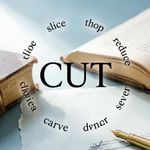
The word “cut” has many meanings, so the best synonym depends on the context. You can use words such as slice, chop, trim, reduce, divide, sever, slash, decrease, shorten, or edit when you want a more precise alternative.
If you mean cutting an object, reducing an amount, shortening something, or removing part of a text, choosing the right synonym makes your English clearer and more natural.
Quick Answer: What Is a Synonym for “Cut”?
Common synonyms for cut include slice, chop, trim, sever, slash, carve, divide, shorten, reduce, decrease, edit, remove, and abridge.
The correct choice depends on what “cut” means in your sentence:
- Cut bread → slice bread
- Cut vegetables → chop vegetables
- Cut your hair → trim your hair
- Cut the rope → sever the rope
- Cut expenses → reduce expenses
- Cut a speech → shorten a speech
- Cut a paragraph → edit or remove a paragraph
- Cut someone from a team → remove someone
What Does “Cut” Mean?
Cut is a versatile English word that can function as a verb, noun, or adjective. As a verb, it commonly means to use a sharp object to divide or damage something.
For example:
She cut the paper with scissors.
However, cut has many figurative meanings. It can mean to reduce something, remove something, shorten something, interrupt someone, or decrease spending.
The company cut its expenses.
Because the word has so many meanings, replacing it with a more specific synonym can make your writing more precise.
30 Synonyms for “Cut”
1. Slice
Simple meaning: To cut something into thin pieces.
Example: She sliced the bread for breakfast.
Best usage/context: Food, especially bread, meat, fruit, and vegetables.
2. Chop
Simple meaning: To cut something into smaller pieces, usually with repeated movements.
Example: He chopped the onions for the soup.
Best usage/context: Cooking, food preparation, and cutting wood.
3. Trim
Simple meaning: To cut away unwanted or extra parts.
Example: I need to trim my hair.
Best usage/context: Hair, plants, edges, excess material, and small amounts.
4. Sever
Simple meaning: To cut something completely apart.
Example: The workers severed the damaged cable.
Best usage/context: Ropes, cables, connections, relationships, and formal writing.
5. Slash
Simple meaning: To make a long or deep cut with a sharp object.
Example: The knife slashed through the fabric.
Best usage/context: Physical cutting and figurative writing involving sharp or dramatic reductions.
6. Carve
Simple meaning: To cut a shape or design into something.
Example: She carved a pattern into the wood.
Best usage/context: Wood, stone, food, sculptures, and decorative designs.
7. Snip
Simple meaning: To make a small, quick cut.
Example: She snipped the loose thread with scissors.
Best usage/context: Thread, hair, paper, fabric, and small objects.
8. Shear
Simple meaning: To cut hair, wool, or another material off something.
Example: Farmers shear sheep in the spring.
Best usage/context: Wool, animal hair, fabric, and technical contexts.
9. Divide
Simple meaning: To separate something into parts.
Example: We divided the cake into six pieces.
Best usage/context: Objects, groups, quantities, mathematical contexts, and abstract ideas.
10. Cleave
Simple meaning: To split or cut something apart.
Example: The axe cleaved the log in two.
Best usage/context: Formal or literary writing, especially for strong or forceful cutting.
11. Hack
Simple meaning: To cut something roughly or carelessly.
Example: He hacked through the thick branches.
Best usage/context: Rough cutting, branches, vegetation, or informal descriptions.
12. Carve out
Simple meaning: To create or obtain something by removing material or making space.
Example: The workers carved out a path through the forest.
Best usage/context: Physical spaces and figurative expressions such as “carve out a career.”
13. Slice off
Simple meaning: To remove a piece by cutting.
Example: She sliced off a piece of cheese.
Best usage/context: Food and situations involving removal of a distinct piece.
14. Remove
Simple meaning: To take something away.
Example: Please remove the damaged section.
Best usage/context: General writing, instructions, editing, and physical or abstract removal.
15. Eliminate
Simple meaning: To completely remove something.
Example: The company eliminated unnecessary expenses.
Best usage/context: Formal writing, problems, expenses, errors, and unwanted elements.
16. Reduce
Simple meaning: To make something smaller or lower.
Example: We need to reduce our monthly expenses.
Best usage/context: Costs, prices, quantities, risks, workloads, and consumption.
17. Decrease
Simple meaning: To become or make something smaller in amount, size, or degree.
Example: The new policy decreased operating costs.
Best usage/context: Formal and academic writing, statistics, measurements, and quantities.
18. Lower
Simple meaning: To make something less in amount, level, or degree.
Example: The store lowered its prices.
Best usage/context: Prices, levels, temperatures, rates, and expectations.
19. Shorten
Simple meaning: To make something less long.
Example: The editor shortened the article.
Best usage/context: Articles, speeches, meetings, distances, time periods, and sentences.
20. Abbreviate
Simple meaning: To make a word or piece of writing shorter.
Example: The writer abbreviated the long title.
Best usage/context: Words, names, titles, phrases, and formal writing.
21. Abridge
Simple meaning: To shorten a written or spoken work without removing its main meaning.
Example: The publisher abridged the novel for younger readers.
Best usage/context: Books, speeches, articles, and formal writing.
22. Edit
Simple meaning: To change, remove, or improve parts of written or recorded material.
Example: The editor cut several unnecessary sentences from the article.
Best usage/context: Writing, videos, speeches, publications, and content creation.
23. Excise
Simple meaning: To remove something carefully or completely.
Example: The editor excised the irrelevant paragraph.
Best usage/context: Formal writing, editing, medicine, and technical contexts.
24. Prune
Simple meaning: To cut away unwanted or unnecessary parts.
Example: The gardener pruned the tree.
Best usage/context: Plants and figurative writing about removing unnecessary material.
25. Pare
Simple meaning: To remove a thin layer or reduce something gradually.
Example: The designer pared the proposal down to its essential points.
Best usage/context: Food preparation and figurative or formal writing about reducing something.
26. Hack down
Simple meaning: To cut something down roughly or forcefully.
Example: They hacked down the overgrown bushes.
Best usage/context: Trees, plants, branches, and informal descriptions of rough cutting.
27. Clip
Simple meaning: To cut or shorten something, usually quickly.
Example: She clipped the ends of the paper.
Best usage/context: Hair, nails, plants, paper, and small pieces.
28. Divide up
Simple meaning: To separate something into several portions.
Example: We divided up the work among the team members.
Best usage/context: Tasks, food, money, groups, and responsibilities.
29. Slash
Simple meaning: To reduce something sharply or suddenly.
Example: The company slashed its advertising budget.
Best usage/context: Dramatic reductions in prices, budgets, costs, or spending.
30. Omit
Simple meaning: To leave something out.
Example: The writer omitted several unnecessary details.
Best usage/context: Writing, speeches, lists, instructions, and formal communication.
Cut Synonyms Comparison Table
| Synonym | Main Meaning | Common Context | Tone |
| Slice | Cut into thin pieces | Food | Neutral |
| Chop | Cut into small pieces | Cooking | Neutral |
| Trim | Remove excess | Hair, plants, edges | Neutral |
| Sever | Cut completely apart | Cables, connections | Formal |
| Slash | Cut forcefully or sharply | Physical/figurative | Strong |
| Carve | Cut into a shape | Wood, stone, food | Neutral |
| Snip | Make a small cut | Thread, hair | Casual |
| Divide | Separate into parts | Objects, groups | Neutral |
| Remove | Take away | General | Neutral |
| Eliminate | Completely remove | Problems, costs | Formal |
| Reduce | Make smaller | Costs, amounts | Neutral/Formal |
| Decrease | Become or make less | Statistics, quantities | Formal |
| Lower | Make less or lower | Prices, levels | Neutral |
| Shorten | Make less long | Writing, time | Neutral |
| Abridge | Shorten a work | Books, speeches | Formal |
| Edit | Change or remove content | Writing, media | Neutral |
| Excise | Remove completely | Formal editing | Formal |
| Prune | Remove unnecessary parts | Plants, writing | Neutral/Formal |
| Pare | Reduce gradually | Plans, costs | Formal |
| Omit | Leave out | Writing, speech | Formal |
How to Choose the Right Synonym for “Cut”
The easiest way to choose a synonym is to identify what kind of cutting or reduction you mean.
For Physical Cutting
Use slice, chop, sever, slash, carve, snip, shear, clip, or hack.
- Slice → thin pieces
- Chop → smaller pieces
- Sever → completely separate
- Carve → create a shape
- Snip → small, quick cut
- Hack → rough or forceful cutting
For Reducing Amounts
Use reduce, decrease, lower, slash, pare, or cut back.
For example:
The company cut its expenses.
can become:
The company reduced its expenses.
Or, when the reduction is especially large:
The company slashed its expenses.
For Shortening Writing
Use shorten, edit, abridge, excise, omit, or abbreviate.
Compare:
- Shorten a speech → make the speech less long
- Edit a speech → improve or change its content
- Abridge a book → create a shorter version
- Omit a sentence → leave the sentence out
- Excise a paragraph → remove it completely
For Removing Something
Use remove, eliminate, excise, omit, or prune.
The differences are subtle.
Remove is the most general.
Eliminate suggests complete removal.
Omit means leaving something out, especially from writing or speech.
Prune suggests removing unnecessary parts while keeping the useful whole.
Cut vs. Slice
Cut is a broad term, while slice usually refers to cutting something into thin pieces.
Cut the apple.
This simply tells someone to divide the apple.
Slice the apple.
This more specifically suggests making thin pieces.
Cut vs. Chop
Chop usually involves repeated cutting that produces smaller pieces.
Chop the carrots before adding them to the soup.
The word cut is more general and does not specify the size or shape of the resulting pieces.
Cut vs. Trim
Trim means removing unwanted, excessive, or uneven parts.
I cut my hair.
This is grammatically correct but broad.
I trimmed my hair.
This often suggests removing only some length while keeping the general hairstyle.
Cut vs. Reduce
These words can overlap when discussing quantities.
The company cut its budget.
The company reduced its budget.
Both can work, but reduce is often more precise in formal writing.
Cut vs. Shorten
Use shorten when something needs to become less long.
We need to shorten the meeting.
Cut can also work:
We need to cut the meeting short.
However, these constructions are not always interchangeable. Cut has many meanings, while shorten specifically focuses on length or duration.
Common Mistakes When Using Synonyms for “Cut”
Using “slice” for every type of cutting
Not every cutting action is a slice.
You can slice bread, but you would normally chop onions and trim a hedge.
Using “decrease” for physical objects
Decrease generally describes an amount, level, degree, or quantity.
Incorrect or unnatural:
She decreased the paper with scissors.
Better:
She cut the paper with scissors.
Confusing “omit” and “remove”
Omit usually means leaving something out, particularly from writing, speech, or a list.
Remove is broader and can describe physically taking something away.
Using “abridge” in casual conversation
Abridge is correct, but it is relatively formal. In everyday English, shorten is usually more natural.
Using “sever” when you only mean a small cut
Sever suggests complete separation or a serious break.
If you only remove a little material, trim, snip, or clip may be more accurate.
FAQs:
What is the most common synonym for “cut”?
There is no single synonym that works in every situation. Slice, chop, trim, reduce, shorten, remove, and divide are common alternatives depending on the intended meaning.
What is a synonym for “cut” in writing?
For writing, useful alternatives include edit, shorten, abridge, omit, excise, and remove.
What is a synonym for “cut” when talking about money?
Use reduce, decrease, lower, slash, or cut back. For example, “The company reduced its costs.”
What is a synonym for “cut” in cooking?
Common choices include slice, chop, dice, mince, carve, and trim. The best word depends on the type and size of the cut.
What is a formal synonym for “cut”?
Depending on the meaning, formal alternatives include sever, reduce, decrease, eliminate, excise, abridge, and omit.
What is a synonym for “cut” meaning “remove”?
Remove, eliminate, excise, omit, and prune can all express this meaning in appropriate contexts.
What is a synonym for “cut” meaning “make shorter”?
The clearest alternatives are shorten, abbreviate, abridge, and sometimes edit.
What is the opposite of “cut”?
The opposite depends on the meaning. For physical cutting, it may be join or connect. For reducing something, it may be increase, raise, or add. For shortening something, it may be lengthen or extend.
Conclusion
The word “cut” is extremely flexible, which is why choosing a more specific synonym can improve your English. Use slice for thin pieces, chop for small pieces, trim for excess material, sever for complete separation, and carve for shaping.
When “cut” means reducing something, consider reduce, decrease, lower, or slash. When it means shortening or removing written content, shorten, edit, abridge, omit, and excise can be more precise.
The best synonym is not simply the word that means something similar. It is the word that matches the exact action, meaning, tone, and context of your sentence.

I am Camden Thomas, an Administrator at SaysReply. I help maintain our platform and ensure readers find clear, natural, and useful alternative ways to express their thoughts every day.